
How to Keep Your United Way Afloat
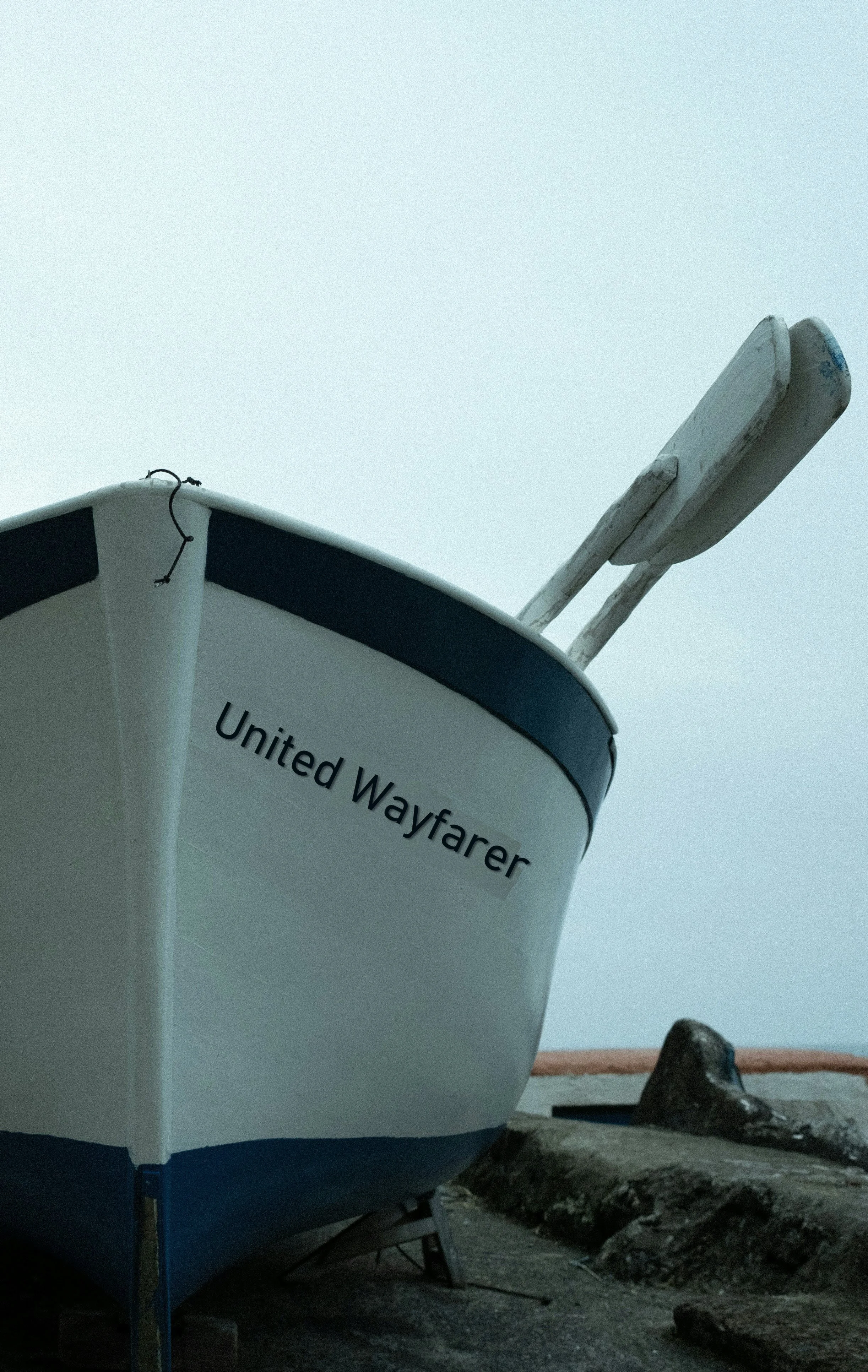
UNITED WAYFARER
After working with over 145 United Ways since 1989, I have discovered an easy and simple way to talk about how United Ways operate – and how they should operate. So, let’s think of your United Way as a boat, which we’ll call the “United Wayfarer.”
WHO OWNS THE UNITED WAYFARER?
The United Wayfarer is owned by the people who live in your community. Since there are a lot of people in your community, a group of community members called your BOARD are appointed to represent the owners. Your board has three responsibilities to fulfill on behalf of the owners.
Responsibility #1: Your board decides the destination of the United Wayfarer – they determine what port the United Wayfarer will sail to. Your board must carefully consider where the owners would want the boat to sail to and choose a destination that the people of the community will support.
Sometimes the board tries to send the United Wayfarer off to several destinations at the same time. It is extremely difficult for the United Wayfarer to reach multiple destinations at the same time, even using quantum physics. When the United Wayfarer has several general destinations, the United Wayfarer tends to sail a little bit toward each of the destinations without ever reaching any of them. The United Wayfarer also tends to be easily blown off course or distracted by mesmerizing songs of sirens along the way – which can be overcome if there is a clear focus on a single destination.
Responsibility #2: Your board members aren’t necessarily good sailors or navigators, so your board hires a captain to oversee the operation of the United Wayfarer and get it to the desired destination. Once your board has determined the destination of the United Wayfarer, it is your captain’s responsibility to determine what to do and how to get to the destination. On the United Wayfarer boat, the captain is typically known as the PRESIDENT/CEO or EXECUTIVE DIRECTOR.
Responsibility #3: Since owners have busy lives and can’t personally check in on the United Wayfarer themselves, they expect your board to monitor the operations of the United Wayfarer and make sure it is obeying all laws, operating safely, financially sustainable, and traveling toward the destination. Your board holds the president/CEO or executive director accountable for operating the United Wayfarer properly.
Your board is not responsible for rowing the boat, feeding the crew, swabbing the deck, or selling tickets to ride on the United Wayfarer. Your board members should be passionate about the destination, supportive of your captain, and watch the operations of the United Wayfarer vigilantly.
AYE AYE CAPTAIN
The United Wayfarer is under the command and control of the captain (president/CEO or executive director). Once your board tells your captain to “Set sail for reducing poverty” or “Set sail for increasing the number of children reading at grade level,” your captain is solely responsible for determining what to do and how to get the United Wayfarer to that desired destination.
Most United Wayfarer boats are large enough that your captain will need to have a crew to help row the boat. Your captain is responsible for hiring the crew, supervising the crew, and evaluating the performance of the crew.
However, some United Wayfarer boats are small, so there may only be your captain and not a crew. In this case, your captain not only determines what to do and how to get the United Wayfarer to the desired destination, they are also rowing the boat. In these cases, volunteers often help your captain row the boat.
Sometimes your board will overstep their responsibilities and want to help row smaller United Wayfarer boats. Remember, your board is not responsible for rowing the boat. If the captain of a small United Wayfarer boat needs help, they should put out a call for volunteers to help row the boat. If a board member decides to answer that call and volunteer to help – great! But they are helping as a volunteer, not as a board member. As a volunteer, they are under the supervision of your captain, and it is your captain’s responsibility to determine what to do and how to do it – not the volunteer.
Board <> Captain <> Crew. Your captain, and only your captain, reports to your board. Your crew reports to your captain, not your board. Your board does not hire, supervise, or evaluate your crew.
ROW, ROW, ROW YOUR BOAT
The crew of the United Wayfarer are a passionate, dedicated bunch of do-gooders who want to change the world. Under the direction of your captain, your crew row the United Wayfarer toward its destination. On the United Wayfarer boat, the crew are typically EMPLOYEES and sometimes volunteers or outsourced.
But when the destination is unclear, or there is more than one destination, or the destination keeps changing, the United Wayfarer loses momentum and stops moving forward. If 9 employees are rowing on the starboard side of the boat, and 3 employees are rowing on the port side of the boat, then the United Wayfarer tends to go in a circle.
Similarly, if some of the employees are rowing with a cadence of 8 strokes a minute, while other employees are rowing at a cadence of 2 strokes a minute, the United Wayfarer loses momentum.
Over time, the lack of a clear, consistent destination can cause crew members to leave the United Wayfarer. Frequent turnover means the captain is stuck in a cycle of recruiting and training more crew members.
ALL ABOARD!
Passengers are people who are willing to pay for the opportunity to sail on the United Wayfarer to your destination. On the United Wayfarer, passengers are typically DONORS and sometimes institutional funders.
Passengers will only get on the United Wayfarer because they want to go where the United Wayfarer is going. If passengers do not know, or are unsure, where the United Wayfarer is going or think another boat will get them where they want to go – they will not get aboard the United Wayfarer.
Getting tickets to ride the United Wayfarer can be challenging, as the ticket booths are not easily accessible for most people. The majority of tickets to the United Wayfarer are sold within the walls of certain organizations known as WORKPLACE CAMPAIGNS. Often, only those people who are exposed to a workplace campaign are asked to buy a ticket for the United Wayfarer. Over the years, the number of ticket booths has diminished, meaning fewer people have an opportunity to buy a ticket.
Some ticket sellers (workplace campaigns) are reluctant to share information about who buys a ticket. This makes it difficult to thank passengers for sailing on the United Wayfarer and to communicate to them the progress the United Wayfarer is making toward the destination. When ticket sellers don’t share information about passengers this makes it difficult to sell tickets to passengers who retire from workplace campaign organizations.
FIVE REASONS WHY THE UNITED WAYFARER SINKS
Potential passengers do not know what port/destination the United Wayfarer is sailing to
Potential passengers do not want to sail to the United Wayfarer’s port/destination
Fewer opportunities exist for passengers to buy tickets to sail on the United Wayfarer
Fewer passengers are sailing, making it difficult to cover the cost of operating the United Wayfarer
The captain and crew are overwhelmed trying to reach multiple destinations
HOW TO KEEP THE UNITED WAYFARER AFLOAT
To stay afloat, United Ways must address these three things in this order: 1) their destination, 2) how they sell tickets, and 3) retaining a good captain and crew.
Our donor and community research has clearly shown very few (less than 15%) of current United Way donors want United Way to raise money and then distribute it to partner agencies or programs. A destination of “Our goal is to raise $2.5 million dollars” does not resonate with the vast majority of United Way donors or potential donors. The destination donors are looking for is related to how many lives are changed because of their contribution. Donors want to give to United Ways with life-changing destinations such as “Lift 1,000 households out of poverty by 2030” or “90% of all third-grade children will be reading at grade level by 2035.”
Without a clear, focused, life-changing destination, the United Wayfarer will sink.
Once you have a clear destination that your donors and community will support, then you need to look at how to sell tickets beyond the workplace campaign. Workplace campaigns have been declining, and there is nothing in our research that shows this decline will turn around. This doesn’t mean you should stop doing workplace campaigns, but it is imperative to ask people to support the work of your United Way outside of workplace campaigns. Once your United Wayfarer has a life-changing destination, it will be easier and more effective to secure grants, planned giving, and sponsorships which will both diversify and grow your resources.
Do not ask more people to buy tickets to sail on the United Wayfarer until you have a destination they want to go to.
Finally, once you have determined your destination and identified how you will diversify and grow your resources, then you need a good captain and crew. Knowing your destination and how you want to grow and diversify resources will allow you to not only recruit but maintain a good captain and crew.
FINDING YOUR DESTINATION
The primary purpose of our New Directions Board and Staff Retreat is finding your United Way’s destination. Since 2008, we have conducted this retreat for 52 United Ways, and 43 of those United Ways have changed their destination, which has resulted in increased resources, more impact, and a higher level of awareness and understanding in their communities.
Learn more about our New Directions Board and Staff Retreat on our website, or grab some time on my calendar and we’ll talk.
A FAVOR
I have a favor to ask. Using the United Wayfarer analogy to explain United Way is something that I have been working on for a while, and this is the first time I am sharing it broadly. Please let me know if you have any suggestions for improving it and if you found it helpful, please forward this post along to others. Thanks!